About Bhutan
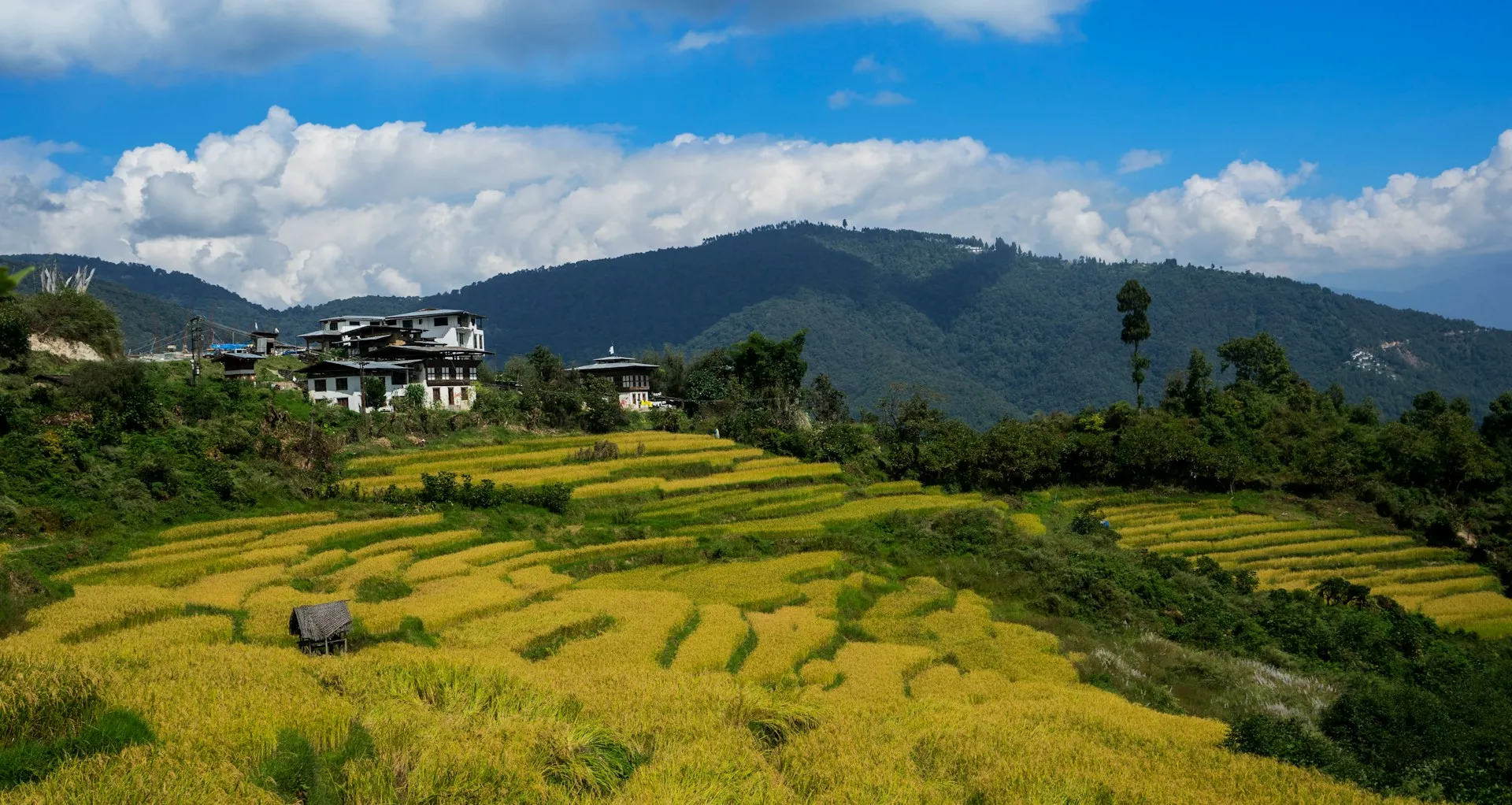
Discover the Land of the Thunder Dragon — a Himalayan kingdom where ancient culture, natural beauty, and happiness are part of everyday life.
Overview
The Kingdom of Bhutan — Druk Yul, Land of the Thunder Dragon — is a small, landlocked Himalayan kingdom nestled between India and China.
Often referred to as the "Last Shangri-La," Bhutan has preserved its ancient Buddhist culture through deliberate policies of controlled tourism and sustainable development. The kingdom pioneered Gross National Happiness (GNH) — measuring progress by citizens' wellbeing, not economic output alone.
Closed to outsiders until the 1970s, Bhutan has since opened carefully while maintaining strict policies to protect its culture and environment. It is one of the few carbon-negative countries on earth — absorbing more CO₂ than it produces.
With landscapes ranging from subtropical plains to sub-alpine Himalayan peaks, ancient Dzongs, vibrant festivals, and warm people, Bhutan offers a genuinely transformative experience unlike anywhere else.
38,394
km² Total Area
72%
Forest Cover
Carbon−
Carbon Negative
20
Dzongkhags (Districts)
Location & Geography
Bhutan sits in South Asia in the Eastern Himalayas, bordered by China to the north and India to the south, east, and west. The country spans approximately 38,394 km² — roughly the size of Switzerland.
Its dramatic altitude range — 160 m in the south to over 7,500 m in the north — creates three distinct ecological zones:
150 – 2,000 m
Southern Plains
Subtropical forests, rice paddies, and tea estates — hot, humid, and rich in biodiversity.
2,000 – 3,500 m
Central Valleys
Temperate zone where most major settlements, Dzongs, and agricultural land are concentrated.
3,500 m+
Northern Highlands
Alpine meadows, glaciers, and Himalayan peaks rising above 7,500 metres.
Environmental Champion
Over 72% of Bhutan is covered by forests, and the constitution mandates at least 60% must remain forested for all time. Bhutan is one of the only carbon-negative countries in the world.
Climate & Weather
Bhutan experiences four distinct seasons, with climate varying significantly by altitude. The weather is influenced by the Indian monsoon from June to September.
Best Time to Visit Travel TipsMarch – May
Spring
Rhododendrons bloom across hillsides, temperatures pleasant, skies clear. Paro Tsechu falls here. Peak season — book well in advance.
June – August
Summer / Monsoon
Heavy rainfall, intensely lush landscapes, fewer crowds, lower prices. Good for those who enjoy solitude and don't mind rain.
September – November
Autumn
Clear skies, exceptional mountain views, and the best trekking conditions. Thimphu and Wangdue Tsechus. Book very early.
December – February
Winter
Cold but brilliantly clear. Snow on high passes, minimal crowds, Punakha Festival in February. Underrated and wonderful.
Currency & Money
The official currency is the Bhutanese Ngultrum (BTN), pegged at par with the Indian Rupee. 1 USD ≈ 94.35 BTN (live rate).
ATMs & Cards
Available in Thimphu, Paro, and major towns. Visa and Mastercard accepted at hotels and larger restaurants.
Cash is Important
Carry sufficient cash especially in remote areas. USD, EUR, and INR can all be exchanged at banks.
Bank Hours
Monday–Friday 9 AM–4 PM, Saturday 9 AM–1 PM. Bank of Bhutan and Bhutan National Bank have the widest networks.
Tipping
Not mandatory but appreciated. 10% in restaurants. Tour guides: $15–20/day; drivers: $10–15/day.
History
Bhutan's history is shrouded in myth and legend, with recorded history beginning in the 8th century. The country has never been colonised and has maintained its sovereignty throughout its existence.
8th Century
Buddhism Arrives
Guru Rinpoche visits Bhutan from Tibet, establishing Buddhism and meditating at Taktsang — the sacred site that would become the Tiger's Nest Monastery.
17th Century
Unification
Zhabdrung Ngawang Namgyal unifies Bhutan as a distinct nation-state, establishes the dual system of government, builds the first Dzongs, and codifies Buddhist law.
1907
Monarchy Established
Ugyen Wangchuck becomes the first hereditary king, establishing the Wangchuck dynasty that continues to this day.
1972
Gross National Happiness
Fourth King Jigme Singye Wangchuck introduces GNH, prioritising holistic development over GDP, and opens Bhutan cautiously to tourism.
2008
Democratic Transition
Bhutan transitions to a constitutional democratic monarchy. First parliamentary elections held. Fifth King Jigme Khesar Namgyel Wangchuck crowned.
Culture & Religion
Bhutan is the only country in the world where Vajrayana (Tantric) Buddhism in its Drukpa Kagyu form is the official state religion. Buddhism permeates every aspect of Bhutanese life — from daily rituals and architecture to national policy.
Prayer Flags
Colourful flags strung across mountain passes and river valleys carry mantras and prayers, spreading blessings with every flutter of the wind.
Tsechu Festivals
Annual religious festivals anchored by Cham — elaborate masked dances performed by monks celebrating Buddhist teachings and local legends.
National Dress
All Bhutanese wear the Gho (men) and Kira (women) to workplaces and formal occasions — a daily living expression of cultural identity.
Dzongs
Fortress-monasteries at strategic valley junctions serve simultaneously as administrative headquarters and centres of spiritual life.
Archery
The national sport, played in every village. Competitions are vibrant social events combining athletic skill with music, dance, and traditional dress.
Monasteries
Over 2,000 monasteries and temples form the spiritual and community lifeblood of every district across the country.
Government & Politics
Since 2008, Bhutan has been a constitutional democratic monarchy. The beloved Druk Gyalpo (Dragon King) remains head of state, while an elected government manages day-to-day affairs.
The Monarchy
Fifth King Jigme Khesar Namgyel Wangchuck (born 1980) is deeply beloved and known for being accessible to his citizens.
Parliament
A bicameral system — the National Assembly (47 elected members) and the National Council (25 members) — provide legislative oversight.
Prime Minister
Head of government, elected every five years through a democratic process, responsible for day-to-day national administration.
Gross National Happiness — Four Pillars
Sustainable Development
Balancing economic growth with wellbeing and equity.
Cultural Preservation
Safeguarding living traditions, language, and heritage.
Environmental Conservation
Protecting forests, rivers, and biodiversity for all time.
Good Governance
Transparent, accountable, and participatory decision-making.
Language
The national language is Dzongkha — "the language of the fortress" — spoken by around 160,000 native speakers. English is the medium of instruction in schools and widely spoken in tourism areas. Nineteen regional languages and dialects are spoken across the country's valleys.
Useful Phrases
National Symbols
National Animal
Takin
A unique bovid found in the alpine meadows, considered the national animal due to its mythological connection to Drukpa Kunley, the Divine Madman.
National Bird
Raven
Sacred to Bhutan, the raven appears on the royal crown and is associated with the protective deity Jarog Dongchen.
National Flower
Blue Poppy
Found in high-altitude meadows, this rare and elusive flower symbolises Bhutan's commitment to protecting its pristine natural environment.
National Tree
Himalayan Cypress
Grows near monasteries and temples throughout the country, symbolising longevity and strength.
National Flag
The Dragon Flag
Diagonal bands of saffron yellow and orange-red, with a white dragon (Druk) clutching jewels in its claws — representing harmony and prosperity.
National Sport
Archery
Traditional archery competitions are major social events, blending athletic skill with cultural celebration, music, and community gathering.
People & Society
With a population of around 727,000 (2023 census), Bhutan is a mosaic of ethnicities. The Ngalop of the west and centre are the largest group, followed by the Sharchop of the east, and various smaller communities.
Free Healthcare & Education
The government provides free education and healthcare to all citizens. English-medium schooling has been in place since the 1960s.
Hospitality
Bhutanese are renowned for warmth, kindness, and a genuine willingness to welcome visitors into their communities and homes.
Gender Equality
Women hold equal legal rights and property ownership under Bhutanese law, and participate fully in public and professional life.